Easy Holiday Table Runner Crochet Free Pattern
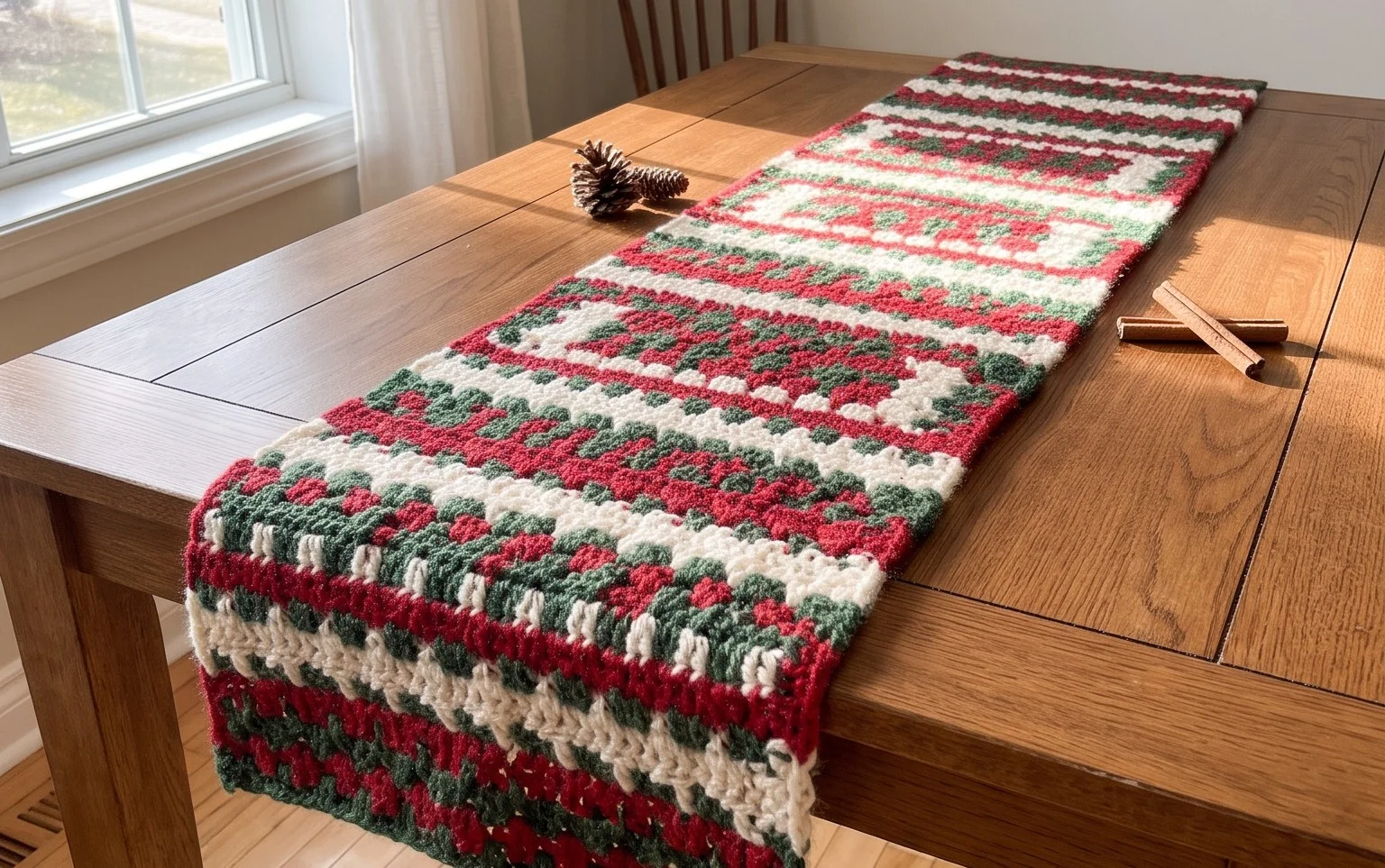
A handmade dining display brings warmth to the winter months, turning your wooden table into a cozy foundation for family meals. This long, narrow accessory features a repeat of simple stitches that result in a flat, even surface perfect for placing candlesticks or decorative seasonal greenery. Beginners enjoy how quickly the rows grow, while experienced makers appreciate the meditative rhythm of the process. You will learn to manage tension across longer lengths to keep the edges straight. This project transforms basic cotton yarn into a polished piece that defines your dining space for upcoming gatherings.
Why You’ll Love This Pattern
This classic crochet dishcloth is designed to be the ultimate functional project for both novices and seasoned makers. The texture created by the moss stitch provides a gentle, scrubby surface that effectively cleans glassware and countertops without scratching delicate finishes. Because it relies on basic single crochet and chain stitches, it works up quickly in a single evening while watching a movie. It is also an excellent stash-buster, as a single cloth requires less than 50 yards of medium-weight cotton yarn.
I managed to finish three of these over the weekend. The moss stitch creates such a dense, professional-looking fabric that actually holds up to daily use in the kitchen.
— Sarah, home crafter
Pattern Overview & Skill Level
- Skill Level: Beginner
- Approximate Time: 1.5 to 2 hours
- Construction: Worked in flat rows using the moss stitch technique
- Finished Dimensions & Sizing: 8 inches by 8 inches
Materials & Supplies Needed
- Yarn: Worsted weight (#4) 100% cotton yarn, approximately 45 yards. Cotton is essential for absorbency and heat resistance.
- Hook Size: 5.0 mm (H-8)
- Notions needed: Yarn needle for weaving in ends, scissors, and an optional stitch marker to keep track of the start of rows.
- Safe yarn substitutions: You may use a cotton-linen blend for increased durability. Avoid acrylic yarns, as they are not absorbent and will melt if they come into contact with hot pans or surfaces.
Stitch Guide & Abbreviations (US Terms)
- ch: Chain
- sc: Single crochet
- st: Stitch
- sk: Skip
- sp: Space (the gap created by a chain stitch)
- Moss Stitch: A pattern of [sc, ch 1, sk 1] repeated across the row.
Step-by-Step Pattern Instructions
Main Cloth
The dishcloth is worked flat. You will start with an even number of chains to ensure the stitch pattern aligns correctly.
- Foundation: Ch 30.
- Row 1: Sc in the 4th ch from the hook. *Ch 1, sk 1 ch, sc in the next ch. Repeat from * across to the end. Turn. (15 sc, 14 ch-1 spaces).
- Row 2: Ch 2. Sc in the first ch-1 space. *Ch 1, sk the next sc, sc in the next ch-1 space. Repeat from * across, finishing with a sc in the space created by the turning chain. Turn. (15 sc, 14 ch-1 spaces).
- Rows 3-30: Repeat Row 2 until the piece measures approximately 8 inches square.
- Finishing: Fasten off the yarn, leaving a 6-inch tail. Use your tapestry needle to weave the end back into the fabric, securing it firmly so it does not unravel during washing.
Care & Washing Instructions
- Machine wash your cotton dishcloths in warm water on a gentle cycle to remove oils and debris.
- Lay the cloth flat on a clean towel to air dry, which helps maintain its square shape and prevents shrinking.
- If the cloth becomes misshapen after drying, dampen it lightly with water, stretch it into a square, and let it air dry again to reset the fibers.
Pro Tips & Common Mistakes to Avoid
Maintain consistent tension throughout your project. Cotton yarn has very little stretch, so if your tension is too tight, the finished cloth will be stiff and difficult to use. If your tension is too loose, the holes in the moss stitch will be too large, reducing the scrubbing power of the cloth.
Place a stitch marker in the first stitch of every row. Beginners often accidentally drop the final stitch of a row, which causes the edges of the dishcloth to slant inward rather than staying straight.
Weave your ends in by threading the needle through the base of the stitches rather than across the surface. This keeps the tail hidden inside the fabric so it does not poke out after several wash cycles.
Adjust the size by chaining any even number. Adding 10 extra chains will make the cloth wider, though you will need roughly 10-15 additional yards of yarn for every two inches of width added.
Frequently Asked Questions
Can I use a larger hook for this pattern?
Using a larger hook will result in a drapier, more open fabric. While this makes the project work up faster, it will make the cloth less effective for scrubbing dishes.
Is this pattern suitable for someone who has never crocheted before?
Yes, this is an ideal starter project. It only requires two basic stitches and provides plenty of practice with maintaining even tension across a long row.
Can I sell the dishcloths I make from this pattern?
You are welcome to sell items made from this pattern. I only ask that you credit the design and use your own photographs for your product listings.
Why does my cloth have a triangular shape instead of a square?
A slanted edge usually indicates that you are accidentally adding or skipping stitches at the beginning or end of your rows. Use a stitch marker on the first and last stitch of every row to ensure your count remains consistent.
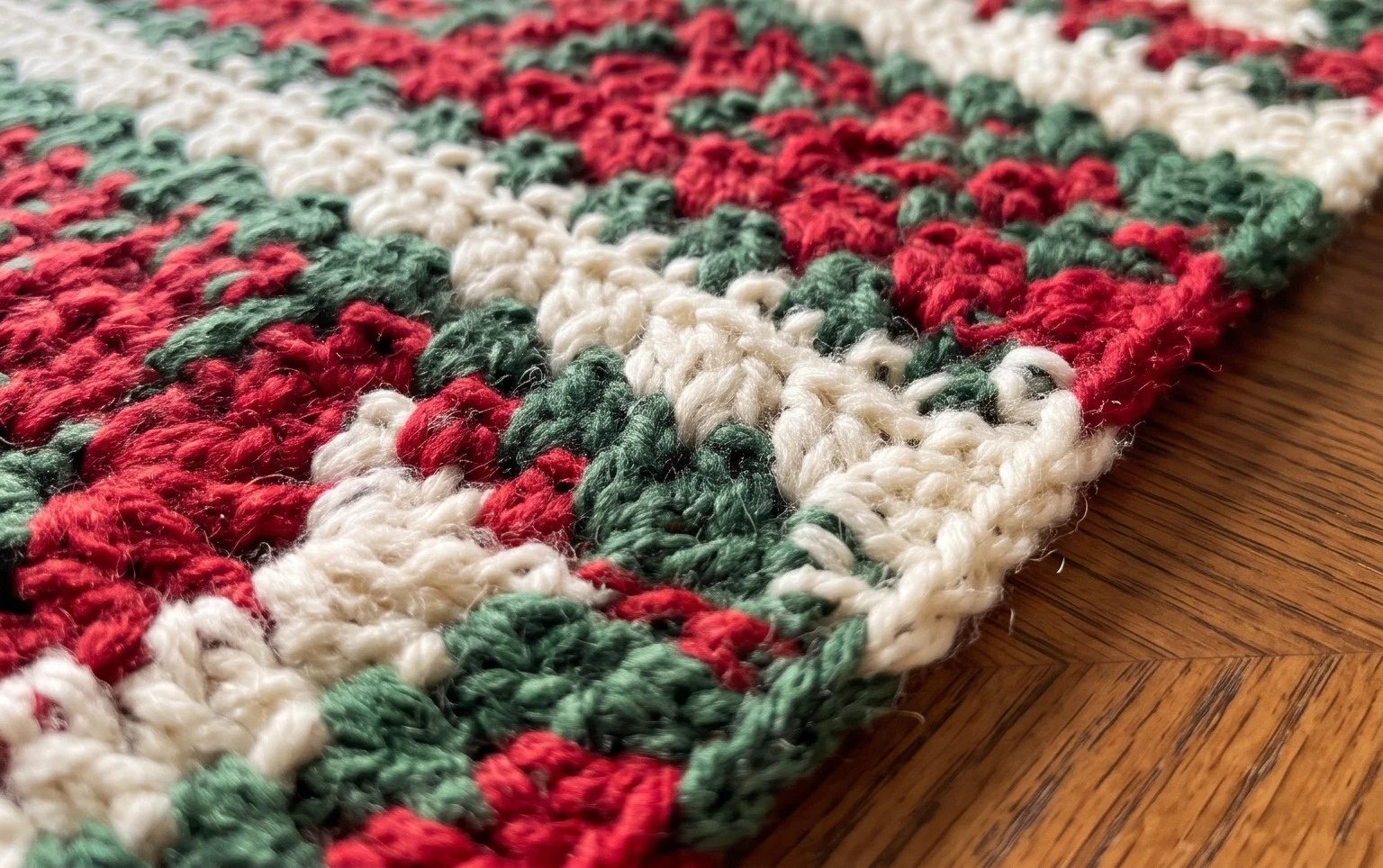
Seeing your handmade piece stretched across the dinner table provides a quiet sense of accomplishment after a few hours of work. If you prefer a different look, try using a metallic thread held alongside your main yarn to add a subtle holiday sparkle to the weave. You can find more free patterns for the home on the blog, including matching coaster designs. Snap a photo of your finished work and share it with others online to show how your color choices came together for the season.