Free Floral Hot Pad Crochet Pattern for Beginners
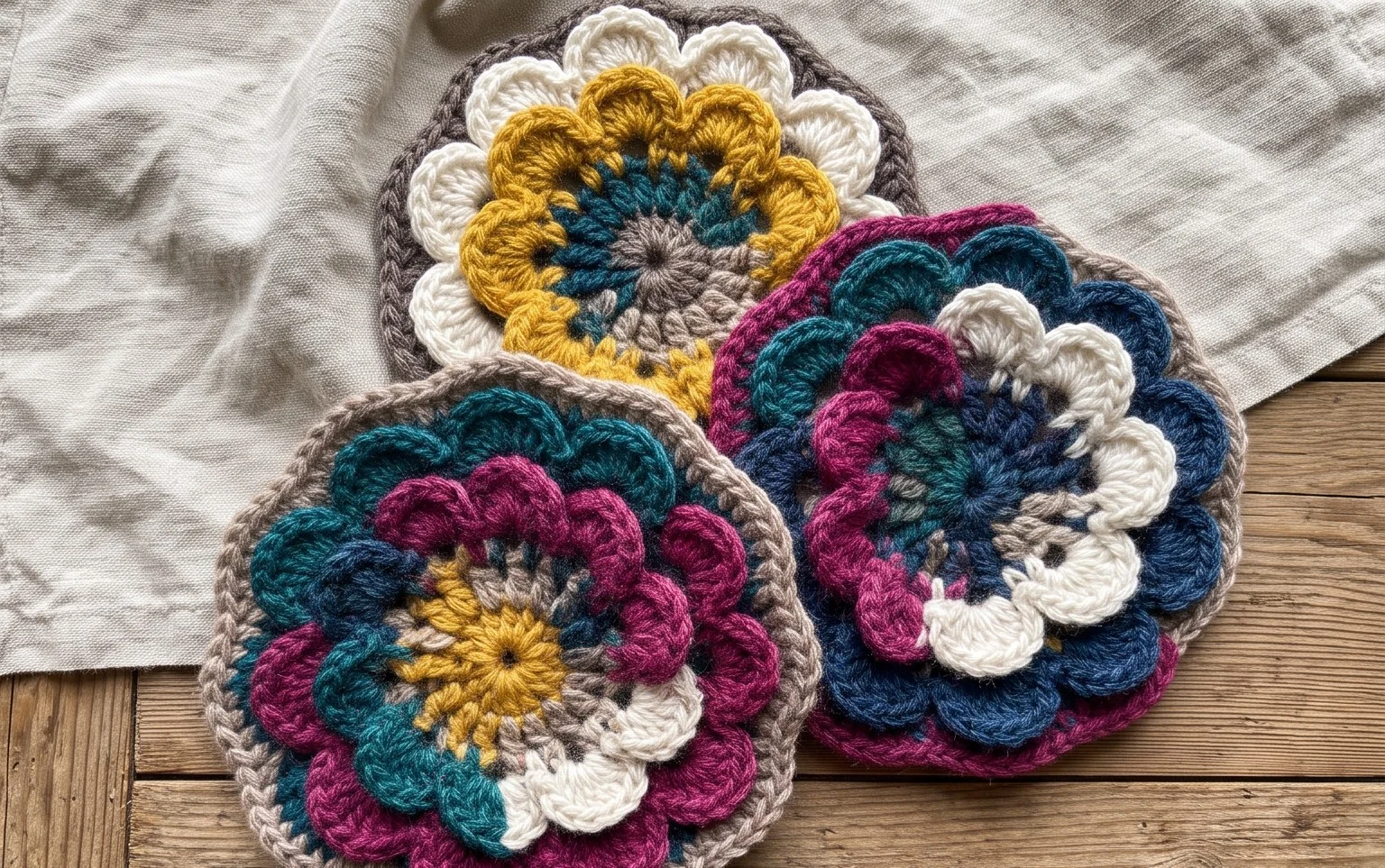
Cotton yarn worked into thick petals gives a floral hot pad its useful weight and a cheerful shape for the kitchen table. These free crochet patterns suit beginners who want to practice familiar stitches, as well as gift makers and anyone who likes handmade home decor. The flower motifs can be made in a single shade or given contrasting centers and petals, so each finished pad can match a kitchen or a season. You’ll find guidance on building up the motif with stitches such as clusters and working a dense fabric that helps protect surfaces from warm dishes. The project is satisfying to watch take shape, and the compact size makes it manageable to finish over a few quiet evenings. Use cotton yarn and check the pattern’s layering instructions before setting a hot pan on your work.
Why You’ll Love This Pattern
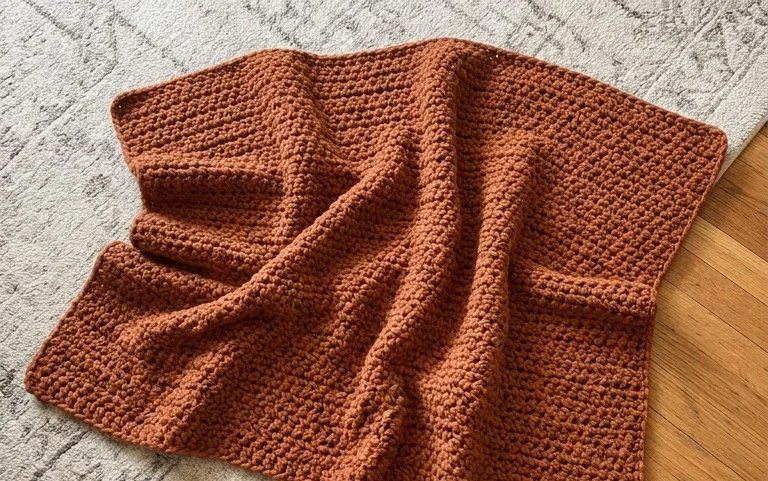
This square dishcloth is made in single crochet, so the fabric is dense enough for everyday kitchen use and the stitch pattern is easy to memorize. It is a practical first project for learning to count rows, and the small size makes it manageable to finish in a few relaxed sessions.
A single ball of cotton usually provides enough yarn, with some left for a test swatch or a second cloth in a coordinating color. The finished square also makes a useful handmade gift that is easy to fold and pair with a bar of soap or a kitchen towel.
The rows were easy to keep track of, and the cotton made a sturdy cloth that washed well after use.
— Maya, sample crocheter
Pattern Overview & Skill Level
- Skill Level: Beginner. You need to know how to chain and single crochet.
- Approximate Time: About 2–3 hours, depending on pace and how often you pause to check your row count.
- Construction: Worked flat in rows from one edge to the other. Turn at the end of each row; no seams or border are required.
- Finished Dimensions & Sizing: About 7.5 × 7.5 in (19 × 19 cm) after washing and drying flat. Exact size depends on your gauge and yarn.
Materials & Supplies Needed
- Yarn: About 90 yd (82 m) of worsted-weight (#4) 100% cotton yarn in one color. Cotton absorbs water and tolerates frequent washing. A small amount of a second color can be used for a separate cloth, but this pattern does not include color changes.
- Hook: 5.0 mm (US H-8) crochet hook.
- Notions: Tapestry needle for weaving in the starting and ending tails, scissors, and a ruler or tape measure. A stitch marker is optional for marking the first stitch of a row.
- Substitutions: Cotton or a cotton-linen blend is the best choice for a washable dishcloth. A cotton blend may feel softer or drape more, and a different yarn thickness will change the finished dimensions and yardage. Avoid fuzzy yarn, which can shed into the cloth and make individual stitches harder to see.
For the stated size, aim for a gauge of 16 single crochet stitches and 18 rows in a 4 in (10 cm) square, measured without stretching. Make a small swatch first. If it is wider than 4 in, try a smaller hook; if it is narrower, try a larger hook.
Stitch Guide & Abbreviations (US Terms)
- ch: Chain.
- sc: Single crochet. Insert the hook into the stitch, yarn over and pull up a loop, yarn over again, then pull through both loops.
- st / sts: Stitch / stitches.
- rep: Repeat.
- turn: Rotate the work to begin crocheting back across the row.
The turning chain does not count as a stitch in this pattern. Work the first single crochet into the first stitch at the base of the chain, not into the turning chain. This keeps the side edges straight and maintains 30 stitches in every row.
Step-by-Step Pattern Instructions
Dishcloth
- Foundation: Ch 31. Keep the chain relaxed so the lower edge does not pull inward.
- Row 1: Sc in the second ch from the hook and in each ch across. The first chain skipped is the turning chain. Turn. (30 sts)
- Row 2: Ch 1, sc in each st across. Turn. (30 sts)
- Rows 3–30: Rep Row 2 for 28 more rows. At the end of Row 30, do not turn. (30 sts)
Finishing
Cut the yarn, leaving a tail of about 6 in (15 cm). Pull the tail through the last loop to secure it. Thread the tail onto a tapestry needle and weave it through several stitches on the wrong side, then change direction and weave it through a few more. Repeat with the starting tail. Trim the ends close to the fabric without cutting the stitches.
Check that the cloth measures close to 7.5 in (19 cm) on each side. If your edges lean, count the stitches at both ends of the rows; missed first or last stitches are the usual cause. Wash and dry the cloth according to the yarn label before using it in the kitchen.
Care & Washing Instructions
- For 100% cotton, machine-wash with like colors in warm water, up to 40°C (104°F), or follow the yarn label if it gives a lower temperature.
- Tumble-dry on low or lay the cloth flat to dry; avoid high heat if the yarn label warns of shrinkage.
- While damp, smooth the edges and reshape the square by hand. If you use a different fiber, follow its label for washing and drying.
Pro Tips & Common Mistakes to Avoid
- Keep the starting chain relaxed: Tight chains make the first edge shorter than the rest of the cloth. If your foundation is too firm, redo it with a larger hook just for the chain.
- Count as you go: Check for 30 stitches at the end of each row. Place an optional marker in the first stitch of a row if you tend to miss the last stitch when turning.
- Hide ends securely: Weave each tail through the back of the fabric in more than one direction. A short tail can work loose after repeated washing.
- Adjust size with care: Add or remove foundation chains to change the width, then work more or fewer rows to change the height. Each extra stitch and row uses more yarn, so have an additional ball available for a noticeably larger cloth.
Frequently Asked Questions
Can I use acrylic yarn instead of cotton?
You can, but acrylic is less absorbent and may not behave like a traditional dishcloth. Check the yarn label for washing instructions, and make a swatch because the fabric and finished size may differ from cotton.
How can I make the cloth smaller or larger?
Change the foundation chain to adjust width and change the number of rows to adjust height. Keep the row stitch count consistent across the cloth, and expect a larger piece to use more yarn and take longer to dry.
Is this pattern suitable for a first crochet project?
Yes. It uses only chains and single crochet, with no shaping, color changes, or sewing. The main thing to watch is the stitch count, especially the first and last stitch in each row.
May I sell dishcloths made from this pattern?
Check the designer’s terms before selling finished items, and follow any attribution or sales conditions stated there. The yarn maker’s label may also include rules for commercial use of its brand or product images.
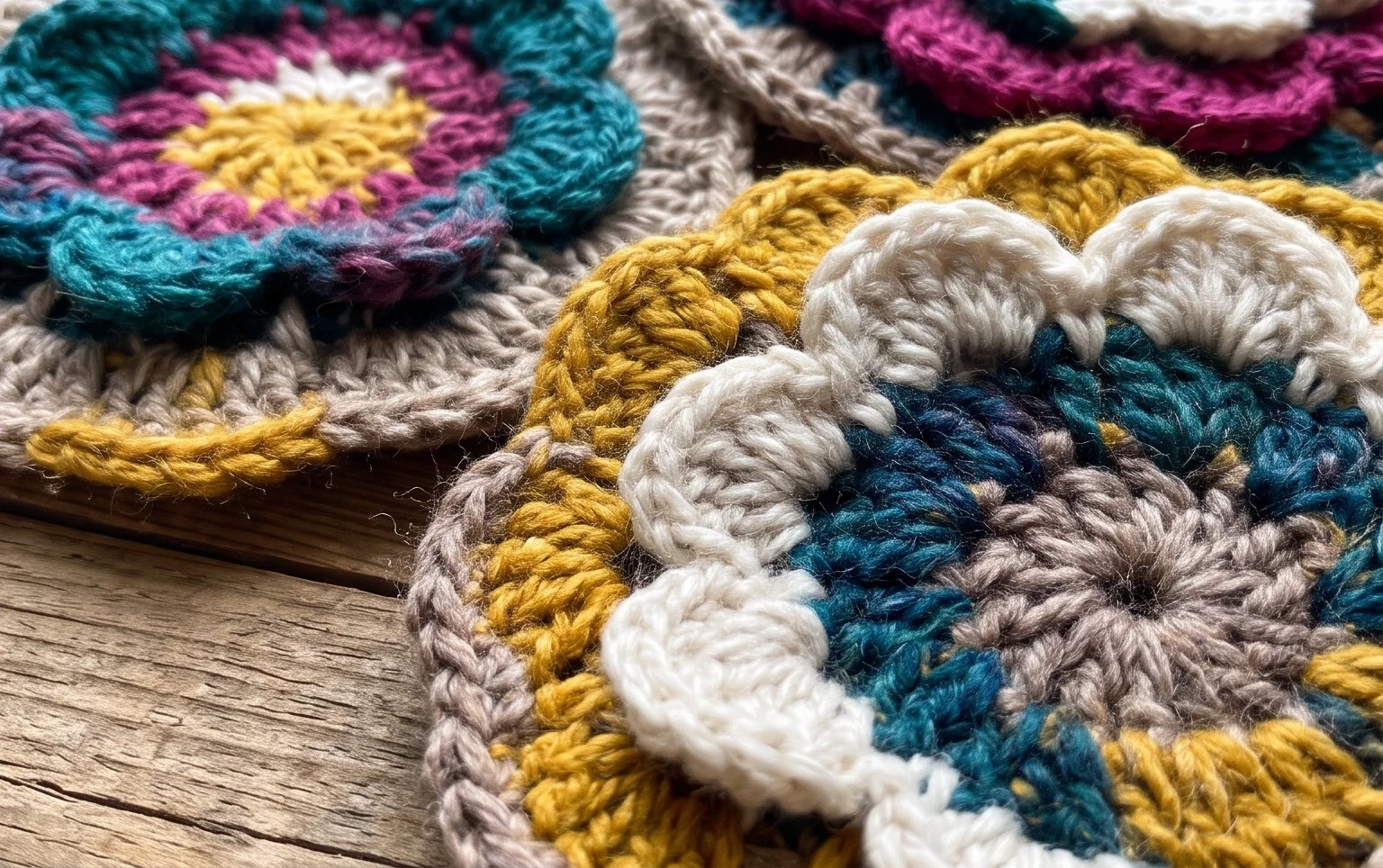
A finished floral hot pad brings a handmade touch to the kitchen, with raised petals and a thick cotton fabric that feels good in the hand. For a simple variation, use one color for the flower and a contrasting shade for its center. Follow the pattern’s directions for thickness, and remember that crochet hot pads are best used with care around very hot cookware. Once yours is complete, share a photo on Pinterest or your favorite social media page so other makers can see your color choices. You can also browse more free crochet patterns on the blog for another small project to make with cotton yarn, whether you need a useful gift or a fresh bit of handmade decor.