Easy Shell Stitch Blanket: Free Beginner Crochet Patterns
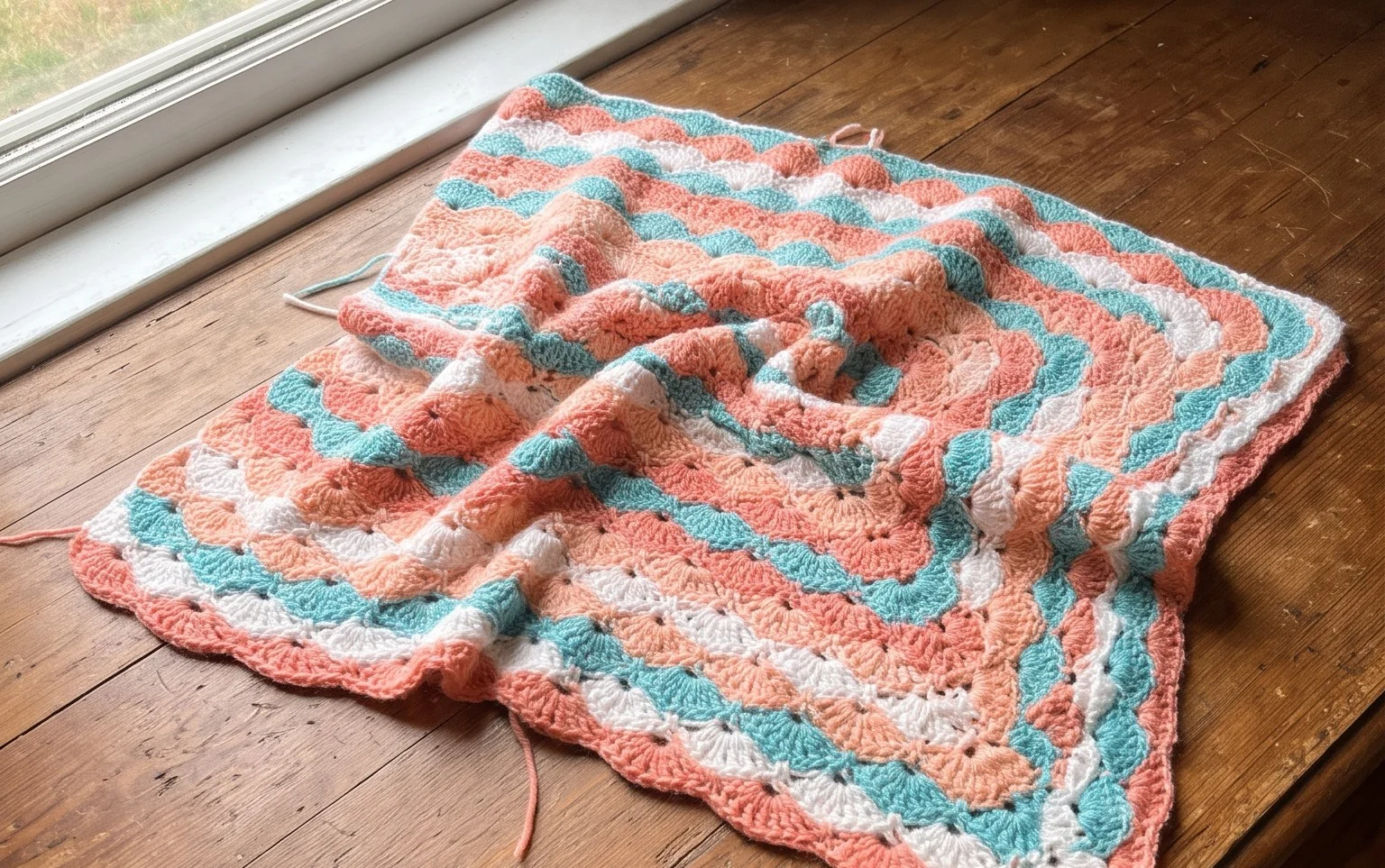
Rows of rounded shell clusters give these crochet blankets a soft, scalloped texture that looks lovely draped over a sofa or folded at the foot of a bed. Depending on the yarn and hook, the fabric can feel light and airy or warm and cozy, so there are options for different seasons and rooms. Beginners can practice keeping stitch counts even, while experienced crocheters can enjoy the steady rhythm of repeating shells. A handmade blanket also makes a thoughtful gift for a new home, a baby’s room, or a friend who loves comforting layers. In this collection, you’ll find free patterns and learn how shell stitches are built, how repeats fit together across a row, and what to watch for at the edges. Choose a color that suits your space, settle into the repeating pattern, and watch the texture grow row by row.
Why You’ll Love This Pattern
This cotton crochet dishcloth is made in single crochet, so the fabric is sturdy, absorbent, and easy to rinse out after washing dishes. Its simple rows make it a practical first project for learning to keep an even edge and count stitches.
The finished cloth is about 8 inches square, a useful size for everyday kitchen cleanup. One skein provides enough yarn for the cloth, and the straightforward stitch pattern is easy to pick up again if you set the work aside between rows.
A crocheter’s sample-project note: The rows were easy to follow, and the cotton cloth felt firm enough to use without becoming stiff.
I liked having a simple project I could finish in an evening. My edges stayed straight once I started counting each row.
— Mara, sample maker
Pattern Overview & Skill Level
- Skill Level: Beginner. You need to chain and make single crochet stitches.
- Approximate Time: About 2–3 hours, depending on your pace and how often you pause to count.
- Construction: Work a flat rectangle in back-and-forth rows, then fasten off and weave in the ends. No seams or edging are required.
- Finished Dimensions & Sizing: About 8.25 inches wide by 8 inches tall after washing and drying. The pattern uses 29 stitches across and 32 rows.
Materials & Supplies Needed
- Yarn: About 75–90 yards of worsted-weight (#4) 100% cotton yarn. Choose one color or use a small amount of a second color for a few contrasting rows.
- Hook: 5.0 mm / H-8 crochet hook. Use the hook that gives you the stated gauge; cotton can feel firm, so avoid pulling the yarn tight.
- Notions: Tapestry needle for weaving in ends, scissors, and a ruler or tape measure. A stitch marker can mark the first stitch of a row.
- Substitutions: A cotton-linen blend is a suitable alternative and may feel a little drapier. Cotton yarn in a different weight changes the cloth’s size and texture; use a hook recommended on its label, then make a gauge swatch and expect to adjust the finished dimensions.
Gauge: 14 single crochet stitches and 16 rows measure 4 inches square in the main stitch pattern. Make a small swatch before starting. If it is too wide, try a smaller hook; if it is too narrow, try a larger one. The dimensions are estimates because cotton, tension, and washing can all affect the final size.
Stitch Guide & Abbreviations (US Terms)
- ch: Chain.
- sc: Single crochet. Insert the hook into the stitch, yarn over and pull up a loop, then yarn over and pull through both loops.
- st(s): Stitch or stitches.
- rep: Repeat.
- turn: Rotate the work to begin the next row on the opposite side.
- Fasten off: Cut the yarn, leaving a tail, and pull the tail through the last loop to secure it.
The turning chain does not count as a stitch in this pattern. Make the first single crochet of every row in the first stitch, directly below the turning chain.
Step-by-Step Pattern Instructions
Dishcloth
Use the 5.0 mm / H-8 hook and worsted-weight cotton. Keep the turning chain loose so the sides do not draw inward. Stitch counts are given at the end of each row.
- Foundation: Ch 30. This chain is the foundation and is not counted as a row.
- Row 1: Sc in the second ch from the hook and in each ch across. Turn. (29 sts)
- Rows 2–32: Ch 1, sc in each st across, turn. Repeat this same sequence for every row in the range. Each row has 29 sts (29 sts per row).
After Row 32, check that both sides have 29 stitches and that the cloth lies flat. If your measured piece is shorter or longer than about 8 inches, that is usually a difference in row gauge rather than a missed stitch.
Finishing
Fasten off, leaving a tail of about 6 inches. Thread the tail onto a tapestry needle and weave it through several stitches on the wrong side. Change direction once before trimming the end so it is less likely to work loose in the wash. Weave in the foundation tail the same way. Wash and dry the cloth before using it to remove any handling residue and let the cotton settle into its finished shape.
Care & Washing Instructions
- Wash cotton in cool or warm water, up to about 40°C (104°F), or follow the temperature on the yarn label.
- Lay the dishcloth flat to dry, or use a low dryer setting if the yarn label allows it.
- While damp, smooth the edges and corners back into shape; blocking is usually unnecessary for a dishcloth.
Pro Tips & Common Mistakes to Avoid
- Keep your tension relaxed and consistent. If the foundation chain is tighter than the rows, the bottom edge may pucker; make the chain with a hook one size larger if needed, then switch back for Row 1.
- Count the 29 stitches at the end of each row. Place a marker in the first stitch if you tend to miss the last stitch at the far edge.
- Weave in yarn tails on the wrong side, passing the needle through the backs of several stitches and changing direction. A short tail woven through only one row can come loose with repeated washing.
- To make the cloth wider, add an even number of chains and work one fewer single crochet than the chain count. To make it taller, add rows. Either change uses more yarn; a larger hook also makes a looser, usually larger cloth.
Frequently Asked Questions
Can I use acrylic yarn instead of cotton?
You can, but acrylic is less absorbent and may feel different when wet. Cotton or a cotton blend is a better choice for a dishcloth. Check the yarn label for washing instructions before substituting.
How do I make the dishcloth larger or smaller?
For width, change the foundation chain and work one fewer single crochet than the number of chains. For height, add or remove rows. Measure as you go, since changing yarn weight or hook size also affects the dimensions and yardage.
Is this pattern suitable for a first crochet project?
Yes. It uses chain and single crochet in straight rows, with no shaping or joining. The main challenge is making sure the first and last stitch of every row are worked so the sides stay even.
Can I sell dishcloths made from this pattern?
You may sell your finished items if the designer’s terms allow it. Check the applicable pattern license, and write your own product description and photographs rather than presenting the pattern itself as your work.
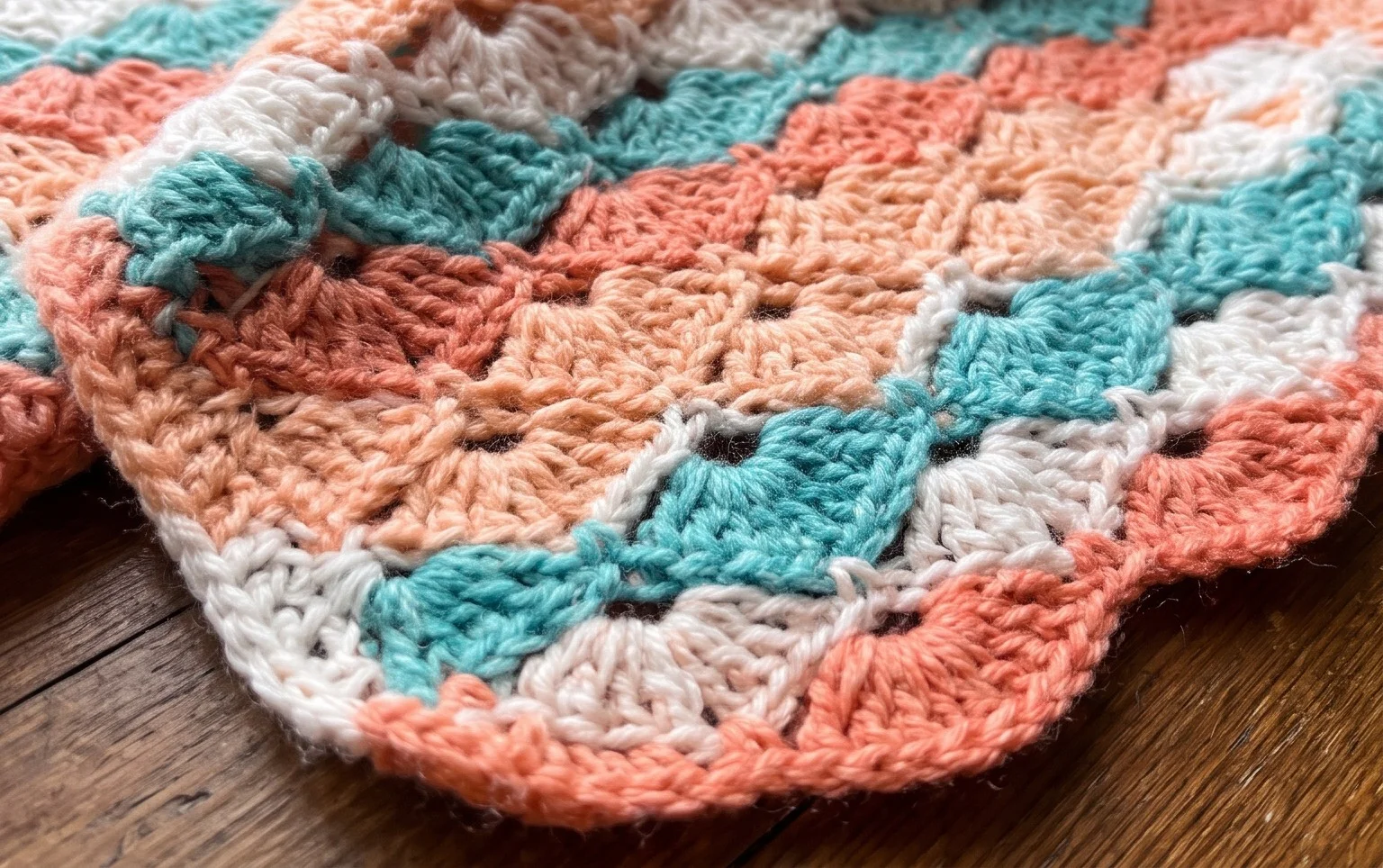
A finished blanket of shell stitches has a pleasing rhythm to it, with curved rows that add texture while keeping the fabric comfortable to use. Once you’ve chosen a pattern, take time to check your gauge and count the repeat at the end of each row; those small habits help the sides stay even as the blanket grows. For a simple variation, work the shells in two coordinating colors, changing shades every few rows for gentle stripes. When your blanket is ready, share a photo on Pinterest or your favorite social platform so other makers can see your color choices and finished texture. Then browse more free crochet patterns on the blog for your next relaxing project.