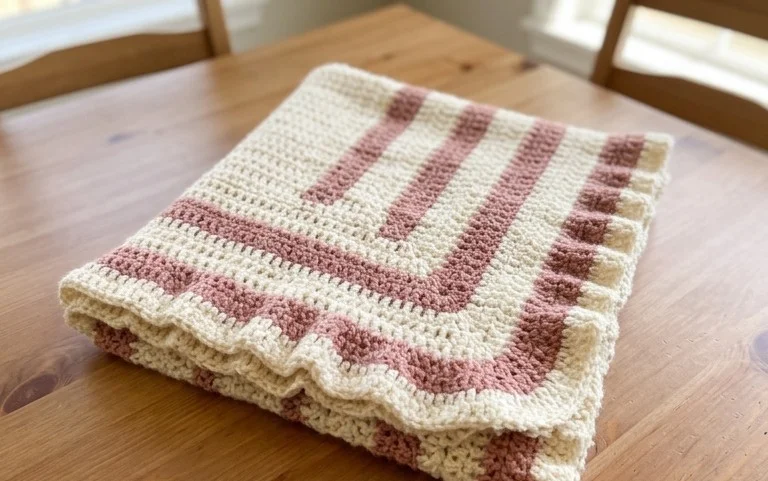
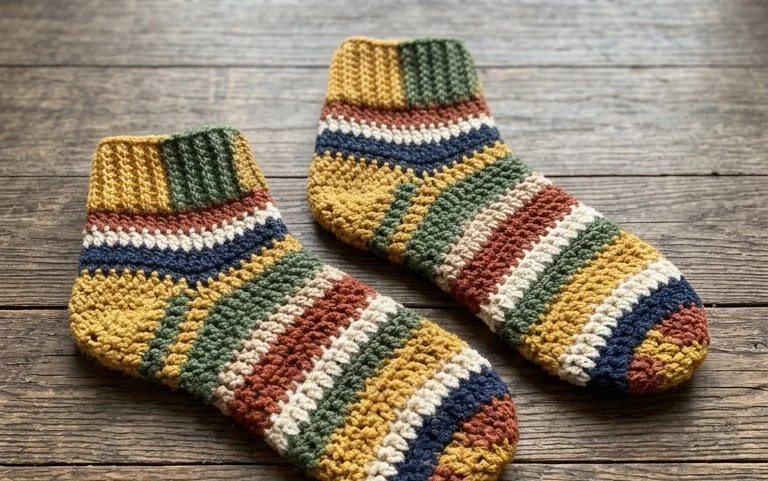
Easy Crochet Unisex Slipper Socks Free Pattern
Soft wool against your skin makes these slipper socks a favorite for lounging around the house on a cold morning. These foot coverings provide warmth without bulk, fitting comfortably inside most shoes or alone on hardwood floors. They are a practical project for anyone learning to shape heels and toes using basic half double crochet stitches. You will enjoy how quickly the fabric builds up as you work in the round, creating a snug fit that stays in place while you walk. This guide explains how to adjust the sizing for a custom fit that works for every member of your family.
Why You’ll Love This Pattern
This beginner-friendly crochet coaster set works up in less than thirty minutes, making it an ideal weekend project for using up partial skeins of cotton yarn. The pattern utilizes basic single crochet stitches worked in joined rounds to create a dense, heat-resistant fabric that protects your furniture from moisture. Because the design relies on simple increases, it is easy to memorize for those times you want to crochet while listening to a podcast or watching a movie. Each coaster measures four inches in diameter, providing a generous surface area for most standard-sized mugs and tumblers.
These coasters were the first project I successfully finished without any help. The instructions are so clear and the result looks professional enough that I plan to make a dozen more as housewarming gifts.
— Sarah, beginner crocheter
Pattern Overview & Skill Level
- Skill Level: Beginner
- Approximate Time: 25 minutes per coaster
- Construction: Joined rounds using standard single crochet increases
- Finished Dimensions: 4 inches (10 cm) in diameter
Materials & Supplies Needed
- Yarn: Worsted weight #4, 100% cotton, approximately 15 yards per coaster. Cotton is necessary for its absorbency and heat resistance.
- Hook Size: 5.0 mm (H-8)
- Notions: Tapestry needle for weaving ends, stitch markers to track the start of rounds, and scissors.
- Yarn Substitutions: You may use acrylic yarn for decorative purposes, but it will not absorb condensation as effectively as cotton and may melt if exposed to very hot temperatures.
Stitch Guide & Abbreviations (US Terms)
- ch: chain
- st(s): stitch(es)
- sc: single crochet
- inc: increase (work 2 sc into the same stitch)
- sl st: slip stitch
- MR: magic ring
Step-by-Step Pattern Instructions
The coaster is worked in continuous rounds. Place a stitch marker in the first stitch of every round to keep track of your position.
Rnd 1: Start with a MR. Work 6 sc into the ring. Join with a sl st to the first sc (6 sts).
Rnd 2: Ch 1, inc in each st around. Join with a sl st (12 sts).
Rnd 3: Ch 1, *sc in the next st, inc in the next st; repeat from * around. Join with a sl st (18 sts).
Rnd 4: Ch 1, *sc in the next 2 sts, inc in the next st; repeat from * around. Join with a sl st (24 sts).
Rnd 5: Ch 1, *sc in the next 3 sts, inc in the next st; repeat from * around. Join with a sl st (30 sts).
Rnd 6: Ch 1, *sc in the next 4 sts, inc in the next st; repeat from * around. Join with a sl st (36 sts).
Finishing
Once Round 6 is complete, fasten off the yarn, leaving a six-inch tail. Use the tapestry needle to weave the yarn tail through the back loops of the final round to secure it. If you prefer a flatter edge, block the coaster by pinning it to a foam mat, spraying it lightly with water, and allowing it to air dry for 24 hours.
Care & Washing Instructions
- Machine wash on a gentle cycle in cold water using a mild detergent to prevent fiber breakdown.
- Lay the coasters flat on a clean towel to air dry, reshaping them with your hands while damp.
- Avoid using fabric softener, as it reduces the natural absorbency of the cotton fibers.
Pro Tips & Common Mistakes to Avoid
Consistent tension is vital for a coaster to lie flat. If your coaster begins to curl, your tension is likely too tight; try going up one hook size. If the coaster ruffles, your tension is too loose, and you should use a smaller hook. Always count your stitches at the end of every round to ensure the increase pattern remains correct, as missing a single increase will cause the circle to warp. Weave your yarn ends diagonally through the stitches on the back side of the coaster to ensure they remain hidden even when the piece is handled frequently.
Frequently Asked Questions
Can I make these coasters larger?
Yes, you can increase the size by continuing the pattern. For each additional round, increase the number of single crochet stitches between the increases by one. For example, Round 7 would follow a sc in 5 sts, inc in next st pattern.
Why does my circle look like a hexagon?
A hexagonal shape usually occurs because the increases are stacked in the same place every round. To avoid this, you can stagger your increases by starting some rounds with a single sc before beginning your sequence.
Can I use variegated yarn for this project?
Variegated yarn works well for coasters and creates a unique look for every piece. Note that the color changes will create a spiral effect in the finished circle.
Is it okay to sell coasters made from this pattern?
You are welcome to sell finished items made from this guide. Please provide credit to the designer when listing your items online or at craft fairs.
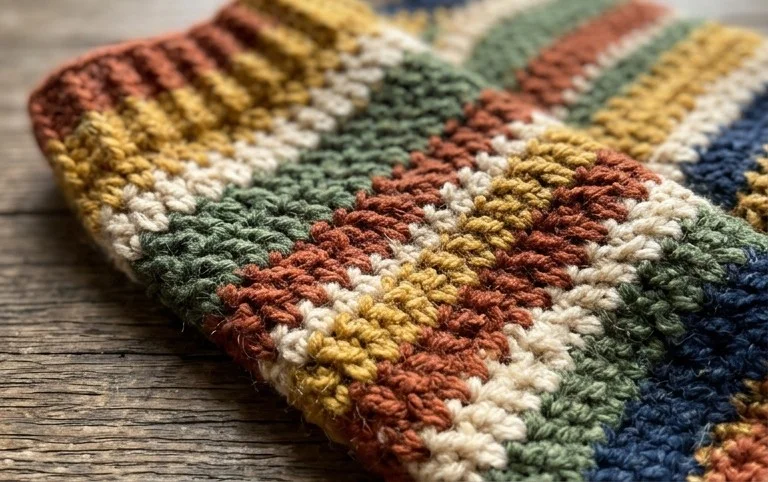
Your finished pair of cozy socks will keep your toes toasty throughout the winter months. Try using a variegated yarn if you want a playful look, or stick to a solid neutral tone for a classic style that matches any outfit. Sharing a photo of your work on social media helps other makers find inspiration for their own projects. You can find more free patterns for warm garments and home accessories on my main blog page whenever you are ready for your next handmade challenge.