Easy Crochet Dish Towel: Free Step-by-Step Pattern
Cotton yarn creates a scrubby, durable surface that outperforms flimsy sponges when cleaning stubborn dried food off your plates. This crochet dish towel features the moss stitch, a repeating sequence that yields a dense fabric with enough texture to lift grease yet remain flexible in your hands. Beginners enjoy this project because it builds muscle memory quickly without requiring complex counts or color changes. You will learn to maintain consistent tension while alternating single crochet stitches and chain spaces. Finishing one in a single evening provides a sense of accomplishment and a functional addition to your kitchen sink area right away.
Why You’ll Love This Pattern
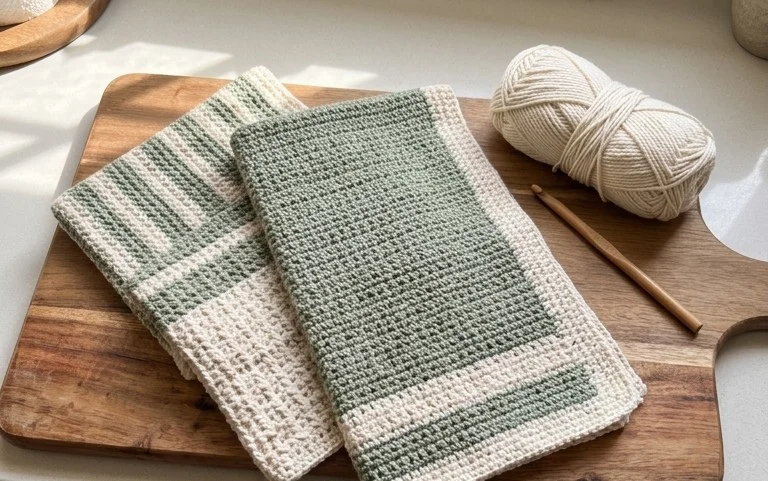
This classic crochet dishcloth works up quickly using the simple moss stitch, creating a durable, textured fabric that excels at scrubbing dishes. The pattern relies on a basic two-row repeat that becomes meditative once you finish the first few rows. Because it uses a small amount of cotton yarn, it serves as an excellent way to use up leftover bits from larger projects. Its generous size provides enough surface area for everyday kitchen tasks while remaining light enough to dry overnight.
I finished this in one evening while watching a movie. The texture is much better than the store-bought sponges I usually reach for.
— Sarah, home cook
Pattern Overview & Skill Level
- Skill Level: Beginner
- Approximate Time: 1 to 2 hours
- Construction: Worked flat in rows with a simple chain-turn turning method
- Finished Dimensions: Approximately 8 inches by 8 inches
Materials & Supplies Needed
- Yarn: Worsted weight (#4) 100% cotton yarn, approximately 50 yards per cloth. Cotton is essential for its absorbency and heat resistance.
- Hook Size: 5.0 mm (US H-8) crochet hook.
- Notions: Tapestry needle for weaving in ends and scissors.
- Yarn substitutions: You may use a cotton-acrylic blend, though it will be less absorbent than pure cotton. Avoid wool or synthetic acrylic as they do not handle kitchen heat or moisture well.
Stitch Guide & Abbreviations (US Terms)
- ch: Chain
- sc: Single crochet
- st(s): Stitch(es)
- sk: Skip
- Moss Stitch: A pattern consisting of alternating single crochet stitches and chain spaces.
Step-by-Step Pattern Instructions
Main Body
- Foundation: Ch 32.
- Row 1: Sc in the 4th ch from hook, *ch 1, sk 1 ch, sc in the next ch. Repeat from * across, ending with a sc in the last ch. (16 sc, 15 ch-1 spaces).
- Row 2: Ch 2, turn. Sc in the first ch-1 space, *ch 1, sk next sc, sc in the next ch-1 space. Repeat from * across, ending with a sc in the top of the turning chain. (16 sc, 15 ch-1 spaces).
- Rows 3-30: Repeat Row 2 until the piece measures 8 inches long or until you reach your desired square size.
- Finishing: Fasten off, leaving a 6-inch tail. Use the tapestry needle to weave the tail through the stitches to secure it.
Assembly and Edging
Because the moss stitch creates a naturally straight edge, a border is optional. If you prefer a sturdier finish, join your yarn at any corner and work one round of single crochet stitches around the perimeter, placing 3 single crochet stitches in each corner to keep the fabric flat. Slip stitch to the first single crochet to join and fasten off.
Care & Washing Instructions
- Machine wash in warm water on a gentle cycle to remove kitchen residue.
- Lay the cloth flat on a clean towel to dry, reshaping it with your hands while damp.
- Avoid using fabric softener, as it reduces the absorbency of the cotton fibers.
Pro Tips & Common Mistakes to Avoid
Maintain consistent tension throughout the project, especially when working your chain stitches, as uneven chains will make the cloth look wavy. Use a stitch marker on the first stitch of every row to ensure you are catching the final chain space correctly, which prevents the edges from slanting. When weaving in your ends, run the needle through the center of the stitches rather than along the edge to ensure the yarn does not pull out during heavy use. If you wish to make a larger dishcloth, simply increase your starting chain to an even number, which will maintain the integrity of the moss stitch repeat.
Frequently Asked Questions
Can I use a different weight of yarn for this pattern?
Yes, you can use DK or bulky weight yarn, but you will need to adjust your starting chain length to reach your desired width. A thinner yarn will require more stitches to reach 8 inches, while a thicker yarn will require fewer.
Is it okay to use synthetic yarn for dishcloths?
It is not recommended. Synthetic fibers like standard acrylic do not absorb water effectively and can melt if they come into contact with a hot pan or stove burner.
Why do my edges look uneven?
Edges often slant when the turner fails to place the final stitch into the correct chain-1 space. Always count your stitches at the end of each row to ensure you have 16 single crochets.
May I sell the dishcloths I make from this pattern?
You are welcome to sell items made from this pattern, provided you credit the designer. Please do not redistribute the pattern text or photos as your own work.
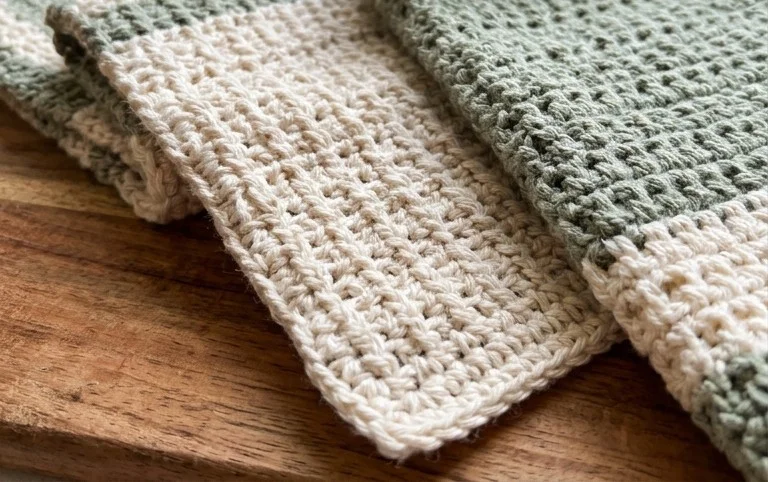
Your new handmade dish towel will soften beautifully after a few spins in the laundry, becoming even more absorbent with regular use. Consider crocheting a larger version by adding more foundation chains for a hand towel, or swap your standard cotton for a variegated yarn to introduce subtle color shifts. Post a picture of your finished work on social media so others can see how your project turned out. Browse the rest of my blog for more simple, practical home items to hook this weekend.