Crochet a Festive Mini Sweater Ornament for Your Tree
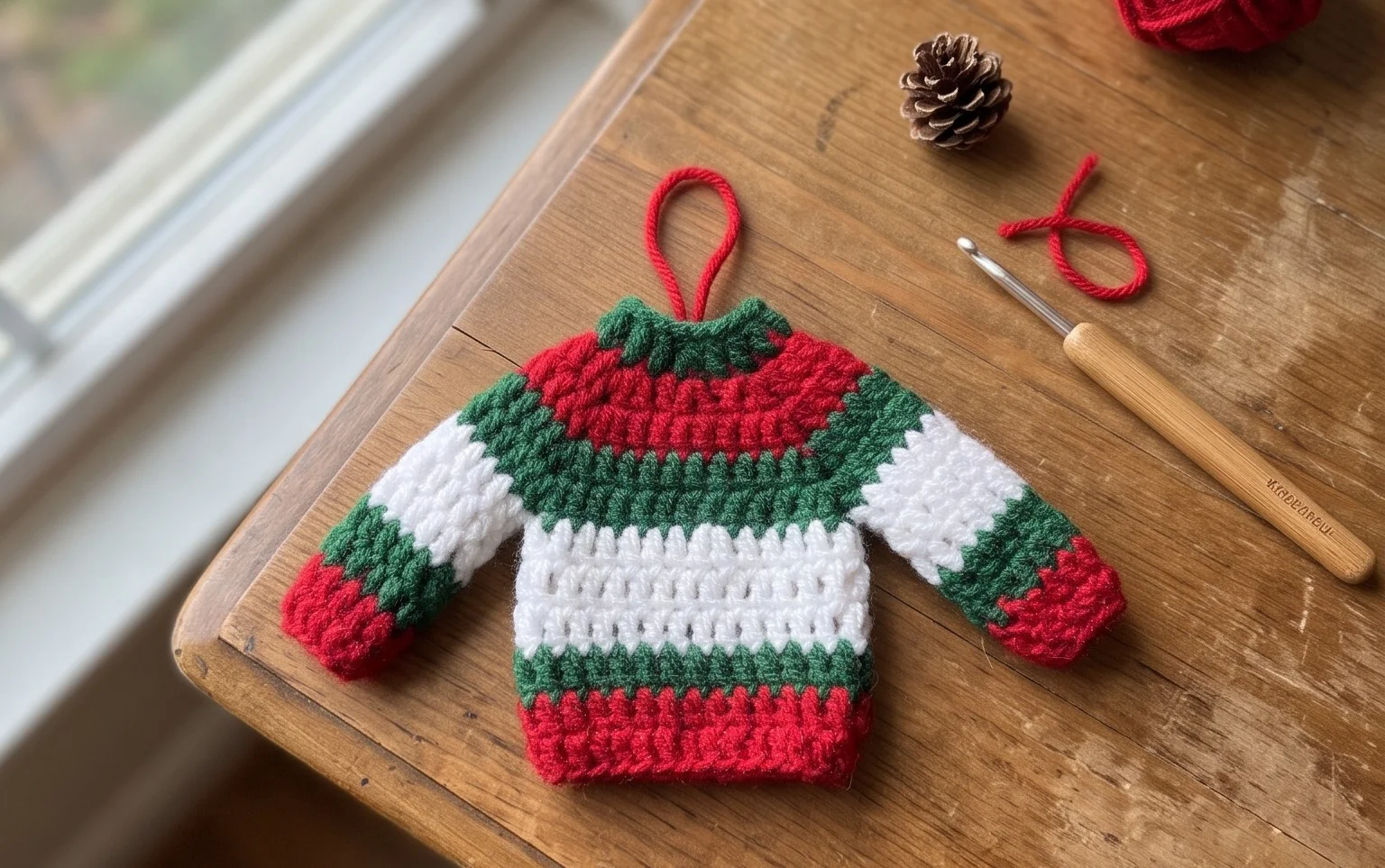
Bright stripes, a tiny collar, and a few playful decorations give this crochet sweater ornament the look of a holiday sweater in miniature. The finished piece is lightweight enough to hang on a Christmas tree, tuck into a gift, or add to a festive garland. Beginners can enjoy the small scale and simple stitches, while experienced crocheters can have fun choosing colors and adding their own silly details. It is a satisfying project because the sweater takes shape quickly, and even a small yarn collection can provide enough for several color changes. In this pattern, you’ll learn how to crochet the sweater shape, work color changes, and finish the ornament with details that make each one feel personal. Make one as a quick seasonal project or crochet a few for handmade gifts.
Why You’ll Love This Pattern
This square cotton dishcloth is worked in single crochet, so the fabric is sturdy, simple to wash, and useful at the sink. The pattern uses one repeated stitch, making it a good project for practicing even tension without keeping track of shaping. A single cloth takes about 90 yards of worsted-weight cotton, so it can also use up a small amount left from another project. Make a set in matching colors for everyday cleaning or as a practical handmade gift.
The rows were easy to follow, and the cotton made a firm cloth that feels good in my hand. I finished one in an evening.
— Anna, beginner crocheter
Pattern Overview & Skill Level
- Skill Level: Beginner. You need to know how to chain and make a single crochet.
- Approximate Time: About 1.5 to 2.5 hours, depending on your pace and how often you stop to check your stitches.
- Construction: The cloth is worked flat in rows from the bottom edge upward. Each row has 30 single crochet stitches, with no shaping or seaming.
- Finished Dimensions & Sizing: Approximately 7.5 inches square (19 cm square) when worked to gauge. Cotton and individual tension can change the final measurements slightly.
Materials & Supplies Needed
- Yarn: About 90 yards (82 m) of worsted-weight cotton yarn, also labeled medium weight or #4. Choose one color, or use small amounts of several colors. Cotton is absorbent and holds up well to frequent washing.
- Hook: 5.0 mm / H-8 crochet hook. If your fabric feels stiff, try a 5.5 mm hook; if it feels loose and floppy, try a 4.5 mm hook.
- Notions: Tapestry needle for weaving in the starting and finishing tails, and scissors.
- Optional tools: A ruler or tape measure helps you check gauge and finished size.
- Substitution: Use another worsted-weight cotton yarn with a similar recommended hook size. Mercerized cotton may feel smoother and slightly less absorbent; unmercerized cotton often makes a softer, more textured cloth. Avoid acrylic for a dishcloth intended to absorb water. A thicker or thinner yarn changes the cloth’s size and may require more or less yardage.
Gauge: 16 single crochet stitches and 18 rows measure 4 inches (10 cm) in a flat swatch, using the 5.0 mm hook. Make a small swatch before starting if matching the stated size matters. Adjust your hook rather than changing the stitch count.
Stitch Guide & Abbreviations (US Terms)
- ch: Chain. Yarn over and pull through the loop on your hook.
- sc: Single crochet. Insert the hook into the indicated stitch, yarn over and pull up a loop, then yarn over and pull through both loops on the hook.
- st: Stitch.
- sts: Stitches.
The turning chain at the beginning of each row does not count as a stitch. Work the first single crochet into the first stitch of the row, directly below the turning chain.
Step-by-Step Pattern Instructions
Dishcloth
- Foundation: Ch 31. The foundation chain is not included in the row stitch count.
- Row 1: Sc in the second ch from the hook and in each ch across. Turn. (30 sts)
- Row 2: Ch 1, sc in each st across. Turn. (30 sts)
- Rows 3–30: Repeat Row 2, working 30 sc in every row. Turn at the end of each row, except after Row 30. (30 sts per row)
After Row 30, cut the yarn, leaving a tail long enough to weave in securely. Pull the tail through the last loop to fasten off. Use a tapestry needle to weave in both yarn ends through several stitches, changing direction once so the tails are less likely to work loose. Trim the remaining yarn close to the fabric without cutting into the stitches.
Measure the cloth while it lies flat. If it is wider or narrower than about 7.5 inches, your stitch gauge differs from the stated gauge. The finished cloth is still usable; use the same hook and tension for the rest of a matching set.
Care & Washing Instructions
- Wash cotton cloths with similar colors in warm water, up to 40°C (104°F), or follow the yarn label if it gives a lower temperature.
- Tumble dry on low or air-dry flat; high heat can cause cotton to shrink.
- After washing, smooth the edges and reshape the square while damp. Blocking is optional for a dishcloth.
Pro Tips & Common Mistakes to Avoid
- Keep the edges even: Work the first single crochet into the first stitch, not into the turning chain. Missing that stitch makes the cloth narrower with every row. If the edge feels tight, loosen the turning chain rather than pulling it higher.
- Count each row: Check for 30 stitches before turning. A removable marker placed in the first stitch can help you spot the row edge, especially if you tend to overlook the last stitch.
- Hide the ends securely: Weave each tail through the backs of several stitches, then change direction before trimming. A short tail woven through only one row can slip out after repeated washing.
- Adjust size with care: To make a wider cloth, add chains to the foundation, keeping the number of single crochet stitches you want plus one extra chain. Add rows for extra length. A larger cloth uses more yarn, while a smaller one uses less; changing the hook also changes the fabric’s density.
Frequently Asked Questions
Can I use a different yarn fiber for this dishcloth?
Cotton is the best choice for a cloth that needs to absorb water and tolerate regular washing. A cotton-linen blend can also work, though it may feel firmer. Acrylic yarn is less absorbent, so it is better suited to a decorative square than a working dishcloth.
How can I make the cloth larger or smaller?
Change the foundation chain to adjust the width and work more or fewer rows to adjust the length. Keep one extra chain beyond the number of single crochet stitches you want. Changing yarn weight or hook size also affects the finished measurements and fabric feel.
Is this pattern suitable for a first crochet project?
Yes. It uses only chain and single crochet, with the same stitch count in every row. The main point to watch is placing a stitch in both the first and last stitch of each row so the square edges stay straight.
Can I sell dishcloths made from this pattern?
You can sell your finished cloths if the designer’s terms allow it. Check the pattern’s usage terms before selling, and write your own product description and photographs rather than presenting the pattern itself as your work.
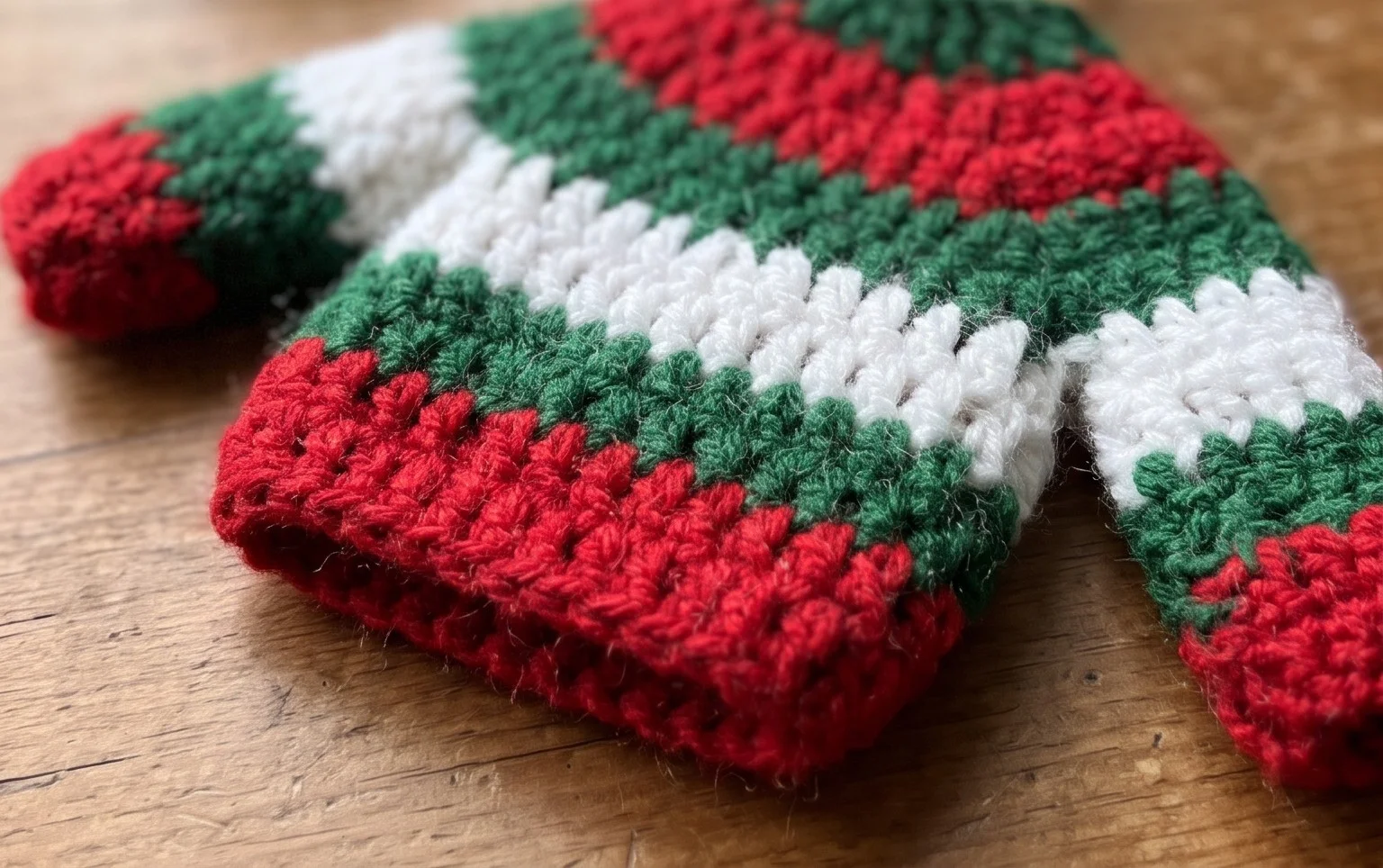
Your finished little sweater brings a cheerful handmade touch to a tree, gift tag, or holiday garland, and it is fun to see each color combination take on its own personality. For a simple variation, use a smaller hook and thinner yarn to make a petite version, or change the stripe colors to match your holiday decorations. Add your own buttons, surface stitches, or other small details if you have scraps left over. If you make one, share a photo on Pinterest or social media so others can see your colors and embellishments. Then browse the blog for more free crochet patterns to make for the season.