Easy Crochet Wallet Patterns: Free Step-by-Step Guide
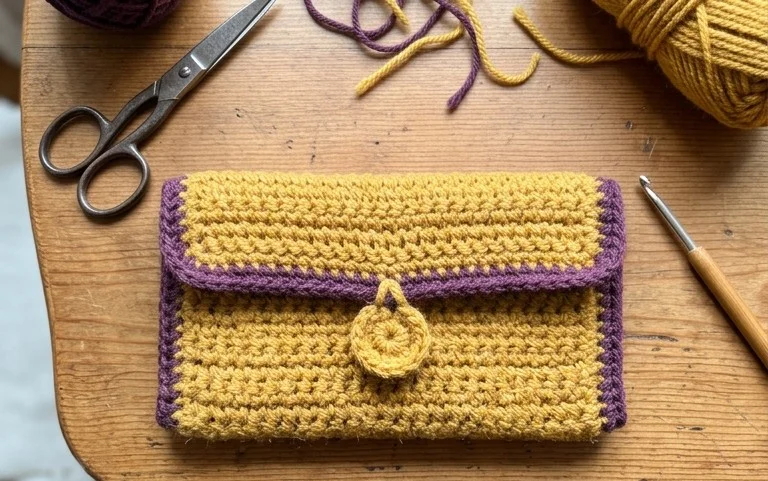
These crochet wallets feature a firm, squishy texture that protects your cards and cash better than a thin fabric pouch. You can finish one in an afternoon, which makes them a go-to project when you need a personalized gift for a birthday or a quick market stall item. Beginners often appreciate how the tight single crochet stitches create a dense fabric that keeps contents secure without requiring a complex lining. You will learn how to build structure through simple foundation rows and how to attach a button closure that stays fastened inside a crowded bag.
Why You’ll Love This Pattern
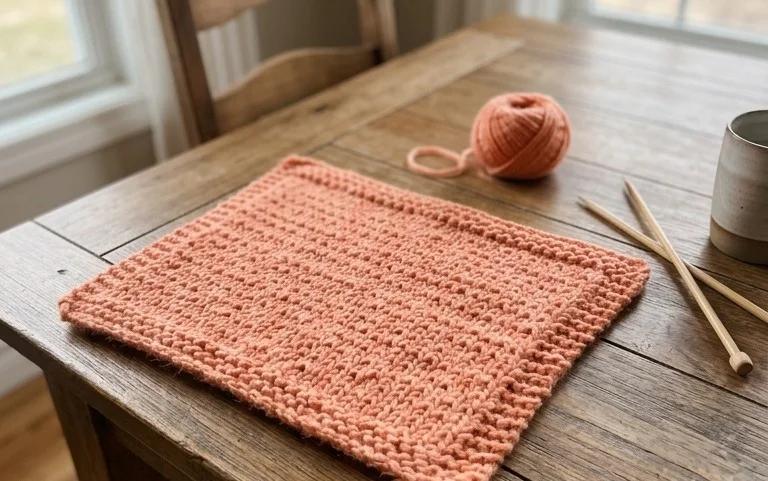
This beginner-friendly crochet coaster pattern provides a practical way to protect your furniture while practicing fundamental stitch techniques. The design works up in under thirty minutes, making it an ideal choice for last-minute gifts or stash-busting projects that utilize leftover yarn ends. Because the pattern uses a repeating moss stitch configuration, it offers a rhythmic, meditative experience that helps new crocheters establish consistent tension. The resulting coaster is dense enough to absorb condensation from cold glasses while remaining soft to the touch.
I managed to finish a full set of four coasters in one evening. The moss stitch looks very professional once you block it, and my friends were impressed that I made them myself.
— Sarah, casual crafter
Pattern Overview & Skill Level
- Skill Level: Beginner
- Approximate Time: 20 to 30 minutes per coaster
- Construction: Worked in flat rows using back-and-forth turning, finished with a simple single crochet border
- Finished Dimensions: 4 inches by 4 inches square
Materials & Supplies Needed
- Yarn: Worsted weight (#4), 100% cotton, approximately 15 yards per coaster. Cotton is preferred for its absorbency and heat resistance.
- Hook Size: 5.0 mm (US H-8)
- Notions: Tapestry needle for weaving ends, scissors, and a measuring tape.
- Safe Yarn Substitutions: Acrylic yarn is a budget-friendly alternative, though it will be less absorbent than cotton. Wool blends may felt over time if washed in hot water. Using a different weight of yarn will change the finished dimensions, requiring a change in hook size to maintain the desired density.
Stitch Guide & Abbreviations (US Terms)
- ch: Chain
- st(s): Stitch(es)
- sc: Single crochet
- sk: Skip
- sl st: Slip stitch
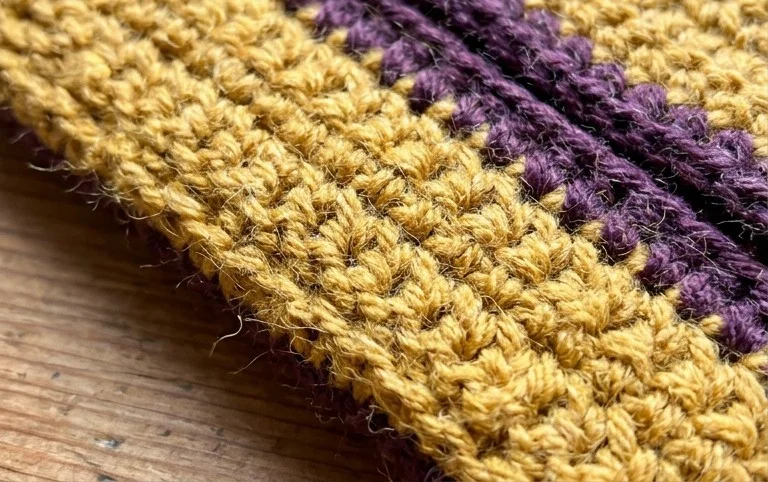
- Moss Stitch: A pattern created by alternating single crochet stitches and chain spaces, where the single crochet of the new row is worked into the chain space of the previous row.
Step-by-Step Pattern Instructions
Coaster Body
- Foundation: Ch 16.
- Row 1: Sc in 4th ch from hook, *ch 1, sk 1 ch, sc in next ch; repeat from * across. Turn. (7 sc, 7 ch-spaces).
- Row 2: Ch 2, sc in first ch-1 space, *ch 1, sk 1 sc, sc in next ch-1 space; repeat from * across, ending with a sc in the turning ch-space. Turn. (7 sc, 7 ch-spaces).
- Rows 3-14: Repeat Row 2 until the piece measures 4 inches square.
Border & Finishing
- Round 1: After completing the last row, ch 1 and sc evenly around all four sides of the square. Work 3 sc into each corner to ensure the coaster lies flat without curling.
- Joining: Sl st into the first sc to close the round.
- Fastening Off: Cut the yarn, leaving a 6-inch tail. Pull the tail through the final loop and use a tapestry needle to weave the end securely into the back of the work.
Care & Washing Instructions
- Hand wash or machine wash on a delicate cycle in cool water to prevent color bleeding.
- Lay the coaster flat on a clean towel and reshape it while damp to ensure it retains its square form.
- Do not tumble dry; air drying preserves the integrity of the cotton fibers and prevents shrinkage.
Pro Tips & Common Mistakes to Avoid
Maintaining consistent tension is the most important factor in keeping your coaster square. If your stitches are too tight, the fabric will pull inward, while loose stitches may result in gaps that look messy. Always use a stitch marker at the start of your border round to avoid skipping the final corner stitches. Weave your yarn ends in multiple directions through the stitches on the back side of the coaster to ensure they do not pull out with regular use. If you choose to increase the size of the coaster for a trivet, add your starting chains in multiples of two; remember that a larger size will require additional yardage to complete.
Frequently Asked Questions
Can I use a larger hook for this pattern?
Using a larger hook will make the fabric more open and airy. For a coaster, a tight stitch is better to handle liquid, so stick to the recommended 5.0 mm hook for a dense, functional result.
Is this pattern suitable for complete beginners?
Yes, this is an excellent starter project. It focuses on the basic single crochet and chain stitch, which are the building blocks of most crochet work.
Can I sell the coasters I make from this pattern?
Check the designer’s terms included with the original pattern file. Generally, individual crafters may sell finished items, but you should always credit the designer in your listings.
Why do the edges of my coaster curl?
Curling usually happens if the tension is too tight or if you have skipped stitches in the corners of the border. Ensure you are working three single crochets into each corner space to provide enough fabric for the turn.
Finishing your own handmade accessory gives you a sense of pride every time you reach for your coins at the checkout line. Try making yours with variegated cotton yarn to create a unique color pattern that hides daily wear better than solid shades. Upload a photo of your finished work to your favorite social media platform so others can see your color choices. Browse our full archive of free patterns to find your next project to keep your needles and hooks moving through the weekend.